

The 2026 Privacy Imperative: Why Data Protection is Your Strongest Competitive Advantage
For years, many organizations treated data privacy as an afterthought — a compliance box to check right before a product launch or a new software rollout. But as we navigate a landscape defined by artificial intelligence, edge computing, and complex international regulations, the paradigm has shifted.
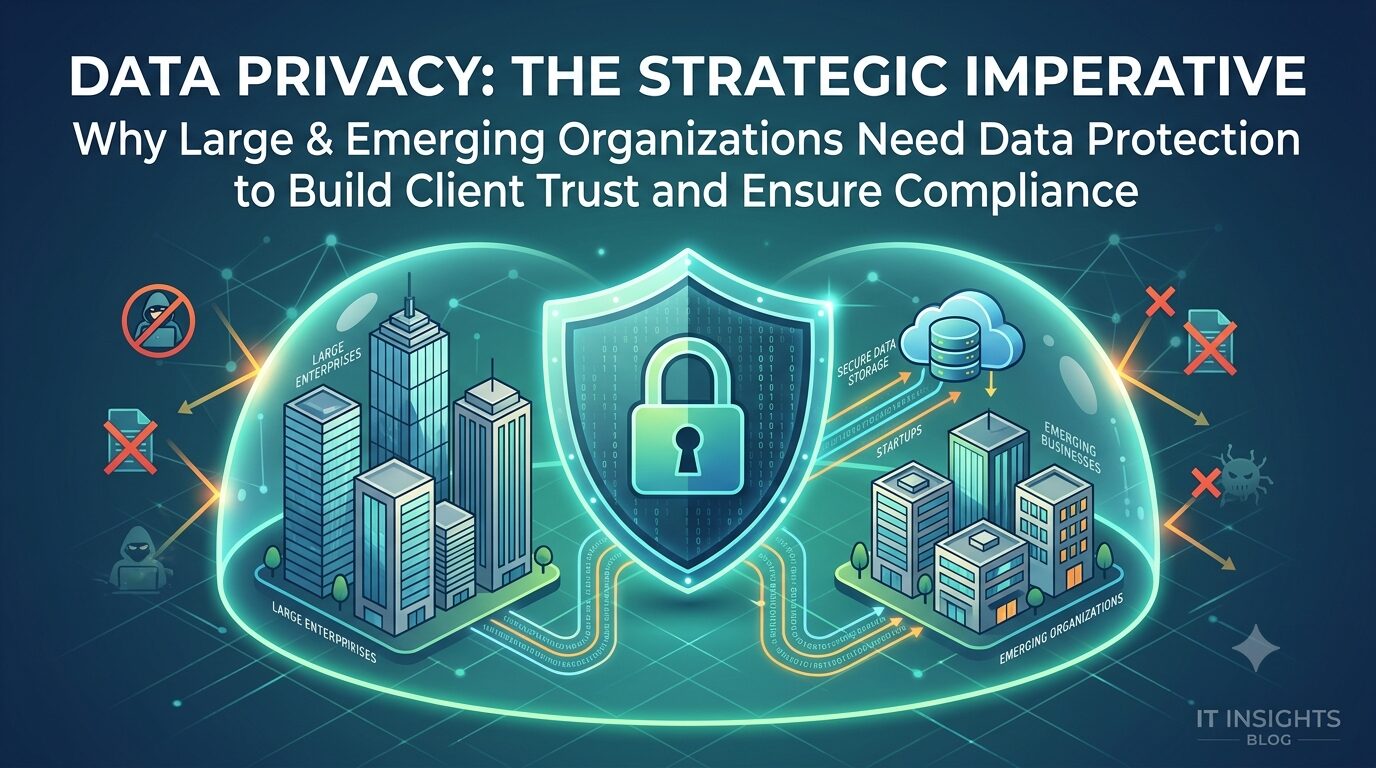
For both large enterprises and emerging organizations, ensuring data privacy for your clients and customers is no longer just a legal necessity; it is a foundational pillar of digital trust and a primary driver of competitive advantage.
Here is what business and IT leaders need to understand about the modern data privacy mandate, and how to effectively integrate it into your operational framework.
The True Cost of Inaction
We are currently operating in an era of strict regulatory enforcement. Frameworks spanning from the EU’s AI Act and GDPR to sweeping North American updates like Canada’s proposed Protecting Privacy and Consumer Data Act (PPCDA) are moving beyond simple warnings. Regulators are actively pursuing enforcement with severe financial penalties — often reaching tens of millions of dollars or up to 3-5% of global revenue.
But fines are only the visible tip of the iceberg. The hidden costs of a privacy failure often cause far more long-term damage:
- Erosion of Digital Trust: Customers today are highly aware of how their data is used. A breach or misuse of data instantly damages hard-earned brand equity.
- Operational Downtime: Recovering from an incident, conducting forensics, and notifying customers halts business momentum.
- Vendor and Supply Chain Exclusion: Enterprise procurement departments now increasingly require comprehensive privacy audits before integrating third-party tools. If your privacy architecture is weak, you will lose out on enterprise contracts.
Moving from Perimeter Security to Zero Trust
The old model of “perimeter defense” — building a strong wall around your network and assuming everything inside is safe — is obsolete. Every endpoint, mobile device, and cloud service is a potential point of entry, and internal threats (whether malicious or accidental) are rising.
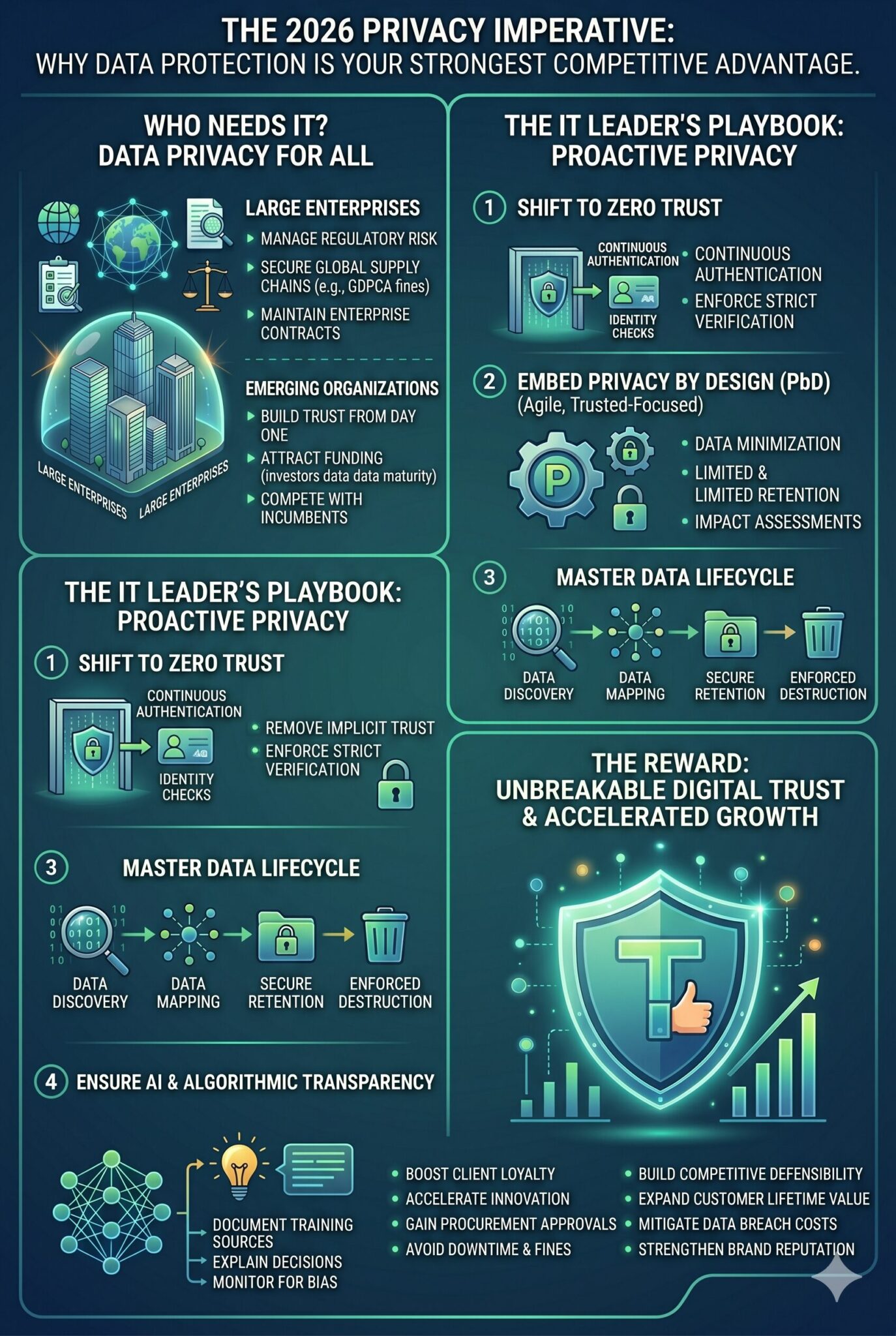
To protect client data today, organizations must adopt a Zero Trust architecture. This means removing implicit trust from your network and enforcing strict identity verification for every user and device attempting to access resources.
Before implementing any new technology, ensure your infrastructure aligns with these Zero Trust principles:
- Identity-Centric Access: Evaluate user, device, and context before granting access to client data.
- Micro-Segmentation: Isolate data stores into specific zones with tightly restricted service calls, ensuring that a breach in one area does not compromise the entire network.
- Adaptive Authentication: Require step-up verification when user behavior appears anomalous.
The Playbook for IT Leaders
Protecting customer data requires a structured, proactive approach. Here is what your organization needs to prioritize right now:
1. Embed Privacy by Design
Privacy cannot be retrofitted. It must be woven into the fabric of your products, services, and systems from the very beginning. This requires adopting “Privacy by Design” (PbD) principles, which means actively minimizing the data you collect, strictly limiting how long you retain it, and ensuring data protection impact assessments are a mandatory step in your development pipeline.
2. Master the Data Lifecycle
You cannot protect what you cannot see. Effective privacy compliance depends entirely on data discovery — knowing exactly what personal data you hold, where it resides (on-premises, in the cloud, or on edge devices), and when it needs to be destroyed. Implement automated tools to map your data flows and enforce strict retention policies.
3. Ensure AI and Algorithmic Transparency
As organizations integrate machine learning and AI into their workflows, regulatory scrutiny on algorithmic transparency is intensifying. If your AI models process client data, you must be able to document your training sources, explain the logic behind automated decisions, and actively monitor for bias. Customers have a right to know how their data feeds your algorithms.
Data privacy is no longer a roadblock to innovation — it is the guardrail that makes speed possible. Organizations that treat customer privacy as a core business function, supported by modern Zero Trust frameworks and proactive data governance, will not only outpace regulatory fines but will win the long-term loyalty of their clients.