

Why Many Organizations Are Discovering the Requirements Have Quietly Changed
Cyber insurance has become an important part of risk management for organizations of all sizes. A strong policy can help offset the financial impact of ransomware, business interruption, legal expenses, recovery costs, and certain types of cyber incidents. But over the last few years, something important has changed.
Qualifying for cyber insurance has become significantly more difficult.
Many organizations still assume that if they had coverage last year, renewal will be straightforward. In reality, insurers have quietly tightened requirements, increased scrutiny, and become far more selective about the security controls organizations have in place. The reason is simple: cyberattacks have become more frequent, more costly, and more disruptive.
As a result, insurers are no longer just evaluating risk after an incident happens. They are increasingly assessing whether organizations are doing enough to prevent one in the first place.
Why Requirements Are Getting Stricter
Cyber insurance providers have paid out billions of dollars in claims related to ransomware, phishing attacks, business email compromise, and data breaches. In response, many insurers have moved away from basic questionnaires and toward deeper security validation. In some cases, organizations are being asked to prove they have protections in place.
In others, insurers may scan external systems, evaluate security posture, or require additional documentation before issuing or renewing a policy. That means cybersecurity is no longer just an IT concern. It’s become a business continuity and insurability issue.
Common Requirements Organizations Are Being Asked About
While requirements vary by provider and policy type, there are several security controls that have become increasingly important.
Multi-Factor Authentication (MFA)
For many insurers, MFA is now non-negotiable.
Organizations are often expected to require MFA across critical systems, including email, Microsoft 365, VPN access, remote desktop tools, privileged accounts, and cloud platforms.
Weak or inconsistent MFA deployment is one of the most common issues organizations run into during renewal.
For example, enabling MFA for only some employees or excluding administrator accounts may create unnecessary risk in the eyes of insurers.
Endpoint Protection and Monitoring
Traditional antivirus alone is often no longer enough.
Many insurers now expect organizations to have stronger endpoint detection and response tools in place, along with active monitoring and patch management practices.
The goal is not only prevention, but also faster detection if something suspicious occurs.
Backup and Recovery Readiness
A backup strategy matters. A tested backup strategy matters more.
Organizations are increasingly being asked:
- Are backups encrypted?
- Are they protected from ransomware?
- Are they separated from production systems?
- Have recovery processes actually been tested?
In many cyber incidents, organizations discover too late that backups existed but could not be restored quickly enough to avoid disruption.
Access Controls and Privileged Accounts
Who has access to what?
Cyber insurers increasingly want organizations to limit unnecessary permissions and reduce administrative access where possible.
This includes:
- Removing dormant user accounts
- Reviewing third-party access
- Limiting admin privileges
- Strengthening password and identity policies
Over-permissioned environments can increase both security exposure and insurance risk.
Employee Awareness Still Matters
Technology alone is not enough.
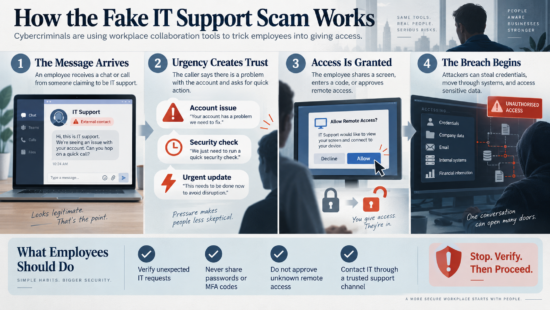
Many cyber incidents still begin with phishing emails, credential theft, or social engineering attempts.
Because of this, insurers may ask whether organizations provide security awareness training or phishing simulations to employees.
It does not need to be complicated, but consistent awareness efforts show insurers that risk is being addressed proactively.
The Hidden Risk: Assuming You’re Covered
One of the biggest mistakes organizations make is assuming coverage guarantees payout. Insurance policies often include specific security obligations. If required protections were not in place at the time of an incident, claims may become more complicated. For example, if MFA was listed as a requirement but not consistently enforced, organizations could face unexpected issues during the claims process.
That is why cyber insurance shouldn’t be viewed as a replacement for cybersecurity. It works best as part of a larger strategy.
A Good Time for a Security Check-In
The good news is that most organizations do not need to overhaul everything overnight.
Often, improving cyber insurability starts with understanding where gaps exist.
Questions worth asking include:
- Is MFA enabled across all critical systems?
- Are backups tested regularly?
- Do we know who has administrative access?
- Are devices being patched consistently?
- Would we feel confident answering a cyber insurance questionnaire today?
Sometimes small improvements can significantly strengthen both security posture and insurability.
Cybersecurity and Business Resilience Go Hand in Hand
Cyber insurance requirements are unlikely to loosen anytime soon. If anything, expectations will continue evolving as threats become more sophisticated. Organizations that take a proactive approach now are often better positioned not only for policy renewals, but for overall resilience when issues arise.
Because in today’s environment, the question is no longer simply:
Do you have cyber insurance?
It may be:
Would your organization still qualify for the same coverage today?
Not sure where your organization stands? Orion Networks helps businesses strengthen cybersecurity, identify gaps, and prepare for evolving technology risks with practical, business-focused IT support.